
PRISMA
COLLECTION
Discover the advanced technologies powering Prisma’s lens designs, engineered for smoother adaptation, wider visual zones, enhanced clarity, and personalized viewing performance.

Frame Adaptive Intelligence
Smoother Peripheral Balance
Dynamic Vision Personalisation
The foundation of Prisma DAFD (Dynamic Adaptable Frame Design) lies in Prisma’s DVS (Dynamic Vision System) Technology, enabling individual customization of design settings including far and near zones, inset, decentration, and more.
By combining DVS and Prisma AI technology with Prisma Cloud computing infrastructure, DAFD design is generated automatically to match the selected frame shape for optimized visual performance.

Aligns progressive zones to fully utilise the frame’s visual area.
Guarantees optimal placement for enhanced visual clarity.
Automatically customizes the width of far and near vision zones.
Prisma AI analyzes multiple configurations to select the most effective lens design for every wearer.
This ensures the perfect balance between reduced astigmatism, wider clear vision areas, and optimal lens thickness.
.png)
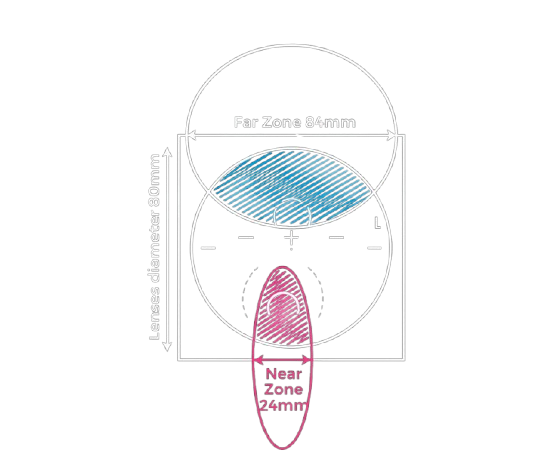
DVS is Prisma’s breakthrough system that customizes progressive lenses for each wearer’s lifestyle. By dynamically adjusting the width of far, near, and intermediate vision zones within a single lens design, DVS delivers a perfectly balanced visual experience. Whether it’s extending the near zone for heavy digital device users or widening the far zone for drivers and outdoor enthusiasts, DVS ensures every wearer enjoys sharper, more natural vision with smoother transitions and minimal distortion.
The problems related to adaptation when using progressive lenses are mainly caused by aberrations present in both the progressive and peripheral areas of vision. These force the wearer into unnatural head movements and create discomfort during daily use.
Poor sharpness in peripheral areas is often the result of integrating different geometries between distance and near vision zones. This creates high astigmatism values and non-homogeneity within the cylinders, generating fluctuations in vision similar to “waves on the sea.”
The stronger these visual waves become, the greater the instability experienced by the wearer. High astigmatism fluctuations may lead to headaches, nausea, adaptation difficulties, and reduced visual comfort.

“Prisma designs guarantee progressive area sharpness close to 99%, while perceived astigmatism trends toward zero.”
Prisma’s BES Technology combines advanced mathematical techniques to standardize astigmatism values across peripheral zones. By controlling average power values and harmonizing surface transitions, BES dramatically reduces distortion while improving clarity across far, near, and channel areas of the lens.
BES is now applied across all Prisma progressive designs to ensure smoother adaptation and greater comfort in every direction of vision. The technology minimizes abrupt changes in power, helping wearers adapt faster while significantly reducing peripheral aberrations and visual fatigue.
